
Privacy-first email security
Layered email defense. Your data stays yours.
LibraCyber combines layered email protection with AI that detects AI-era threats locally. No third-party AI. Full data sovereignty.

Messages analyzed per month
Email threat detection accuracy
Latency for our SLM on standard CPU
Bytes of email content sent outside your environment
Recognized by Analysts and Reviewers
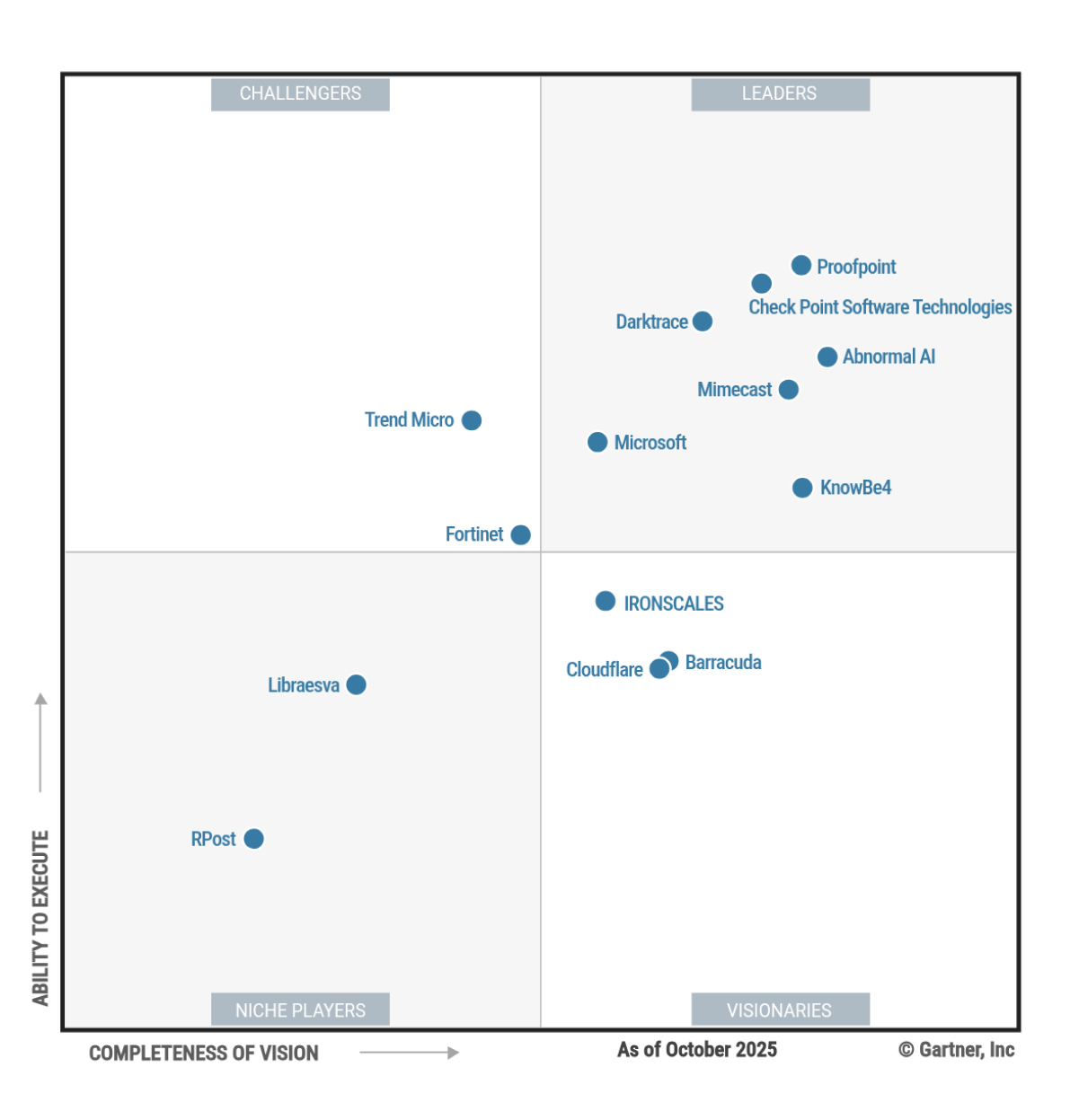

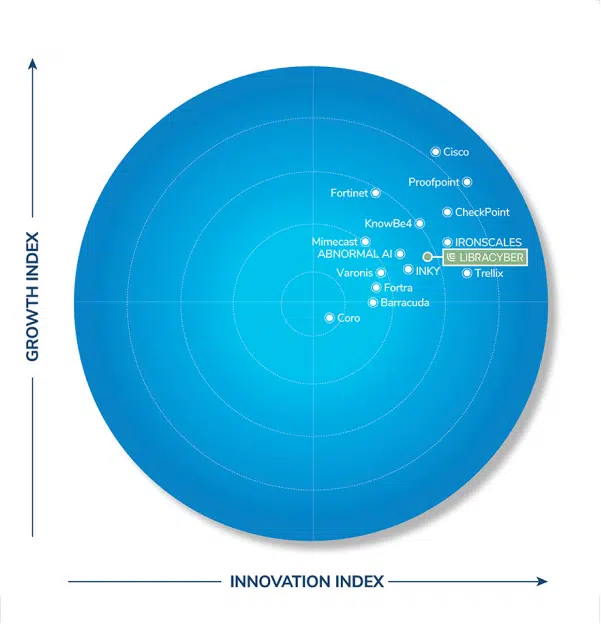



Security & Trust Outcomes
Outcomes that matter to your security team, and your board

Keep every email under your roof
Every scan and analysis happens on your own infrastructure — no email content is sent to the cloud or a thirdparty AI API.

Layered protection, effortless control
Gateway scanning, cloud-API integration, and AI analysis that understands intent and behavior work together to block threats, closing gaps across the email lifecycle.

See your risk. Know your standing
Track email threats and trends against industry benchmarks, while contributing real-world threat-exposure signals to LibraCyber’s broader risk view.
Built to keep your data exactly where it is
No cloud processing, no third-party AI APIs, no training on your data — every analysis runs on your own infrastructure.


Runs entirely on-premises
Semantic AI is a lightweight, purpose-built Small Language Model that runs locally on standard hardware, with sub-one-second latency and no cloud round-trip.

No third-party AI dependency
The Semantic AI and Adaptive Trust Engine operate without relying on public LLMs or third-party AI providers for analysis.

Never trains on your content
Your email content is never used to train public models or shared with third-party AI providers — your data stays yours.

Compliant by architecture, not policy
Local processing supports alignment with data protection and sovereignty requirements — keeping control of sensitive email data built into the architecture.
AI Engine
AI that understands intent, not just structure
Semantic AI and Adaptive Trust Engine understand meaning and behavior to catch attacks traditional filters miss. SecondSight gives employees an on-demand second opinion when unsure.
Semantic AI
Reads intent, not just keywords
Semantic AI reads the meaning and logic of a message — an unexpected vendor name, a tone shift, a request that doesn’t add up. It runs as a local 100M-parameter model and returns deterministic, explainable results: the same message always gets the same verdict

Adaptive Trust Engine
Learns what normal looks like
The Adaptive Trust Engine continuously maps how your organization actually communicates, then flags anomalies and unusual interactions in real time. It never trains on your content, and can proactively hold suspicious outbound messages before a compromised account does damage.

Second Sight AI
A second opinion, on demand
Second Sight AI gives employees an on-demand analysis of any message they’re unsure about — combining content, metadata, and sender reputation into one clear view, so a moment of doubt doesn’t have to become a guess or a support ticket.

Layered protection across the email lifecycle
Covering the full lifecycle of an email, from before it arrives to after it’s already landed.
Gateway + cloud API, layered together
Combines secure gateway scanning with cloud email APIs for Microsoft 365 and Google Workspace — blocking threats pre-delivery and remediating them post-delivery for full lifecycle visibility.
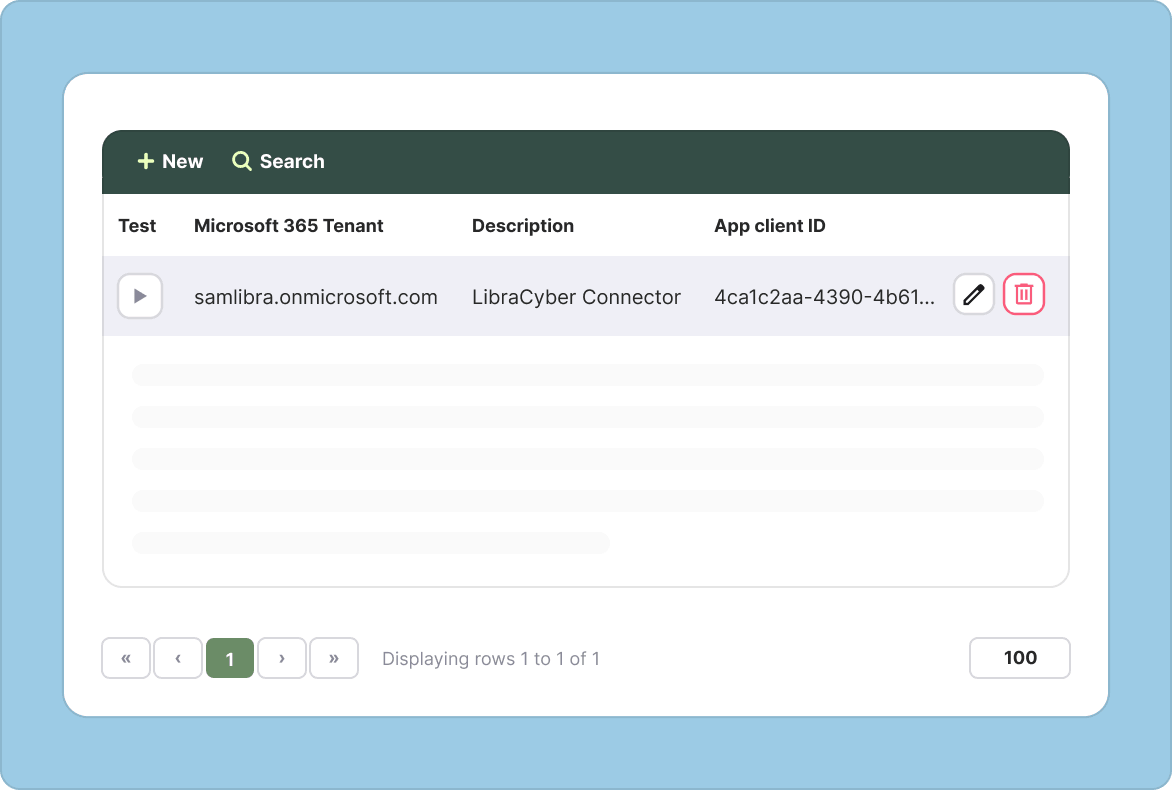
Sandboxing and time-of-click protection
Suspicious attachments run in an isolated sandbox before reaching a mailbox, while every link is re-checked at the moment someone clicks it — closing gaps attackers exploit with delayed-activation threats.
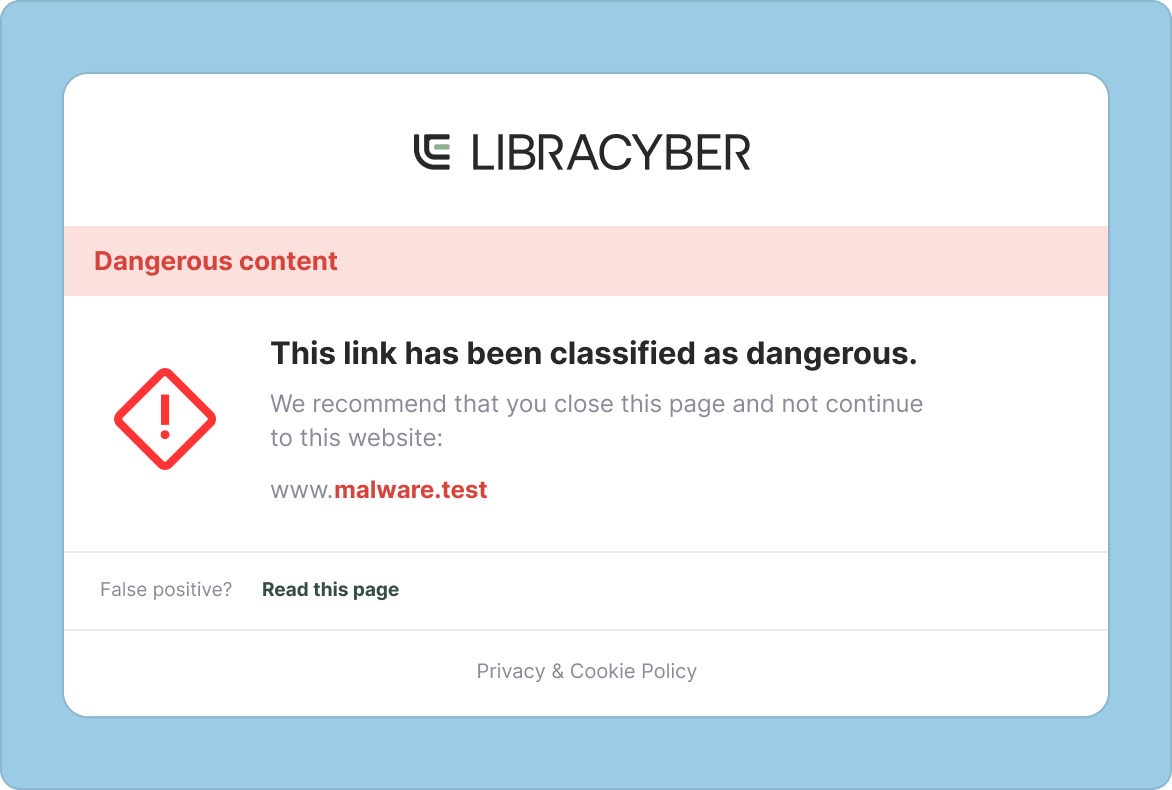
Contain incidents, ride out outages
See exactly what happened and act immediately. One-click remediation removes a threat from every affected mailbox. If your mail platform goes down, Email Continuity keeps your people sending and receiving through the LibraCyber portal.
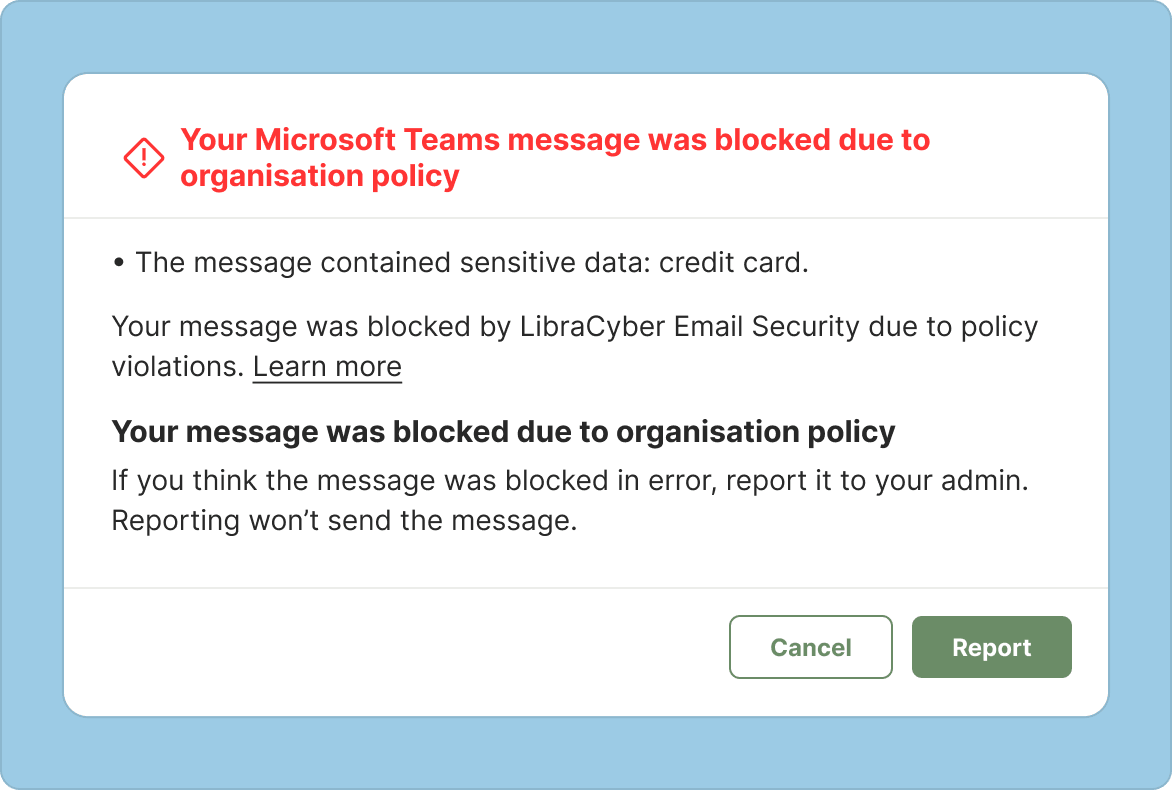
Collaboration protection
Extends the same defenses to Microsoft Teams, blocking policy violations your people post and flagging threats from outside. Anything caught there strengthens your email protection too.
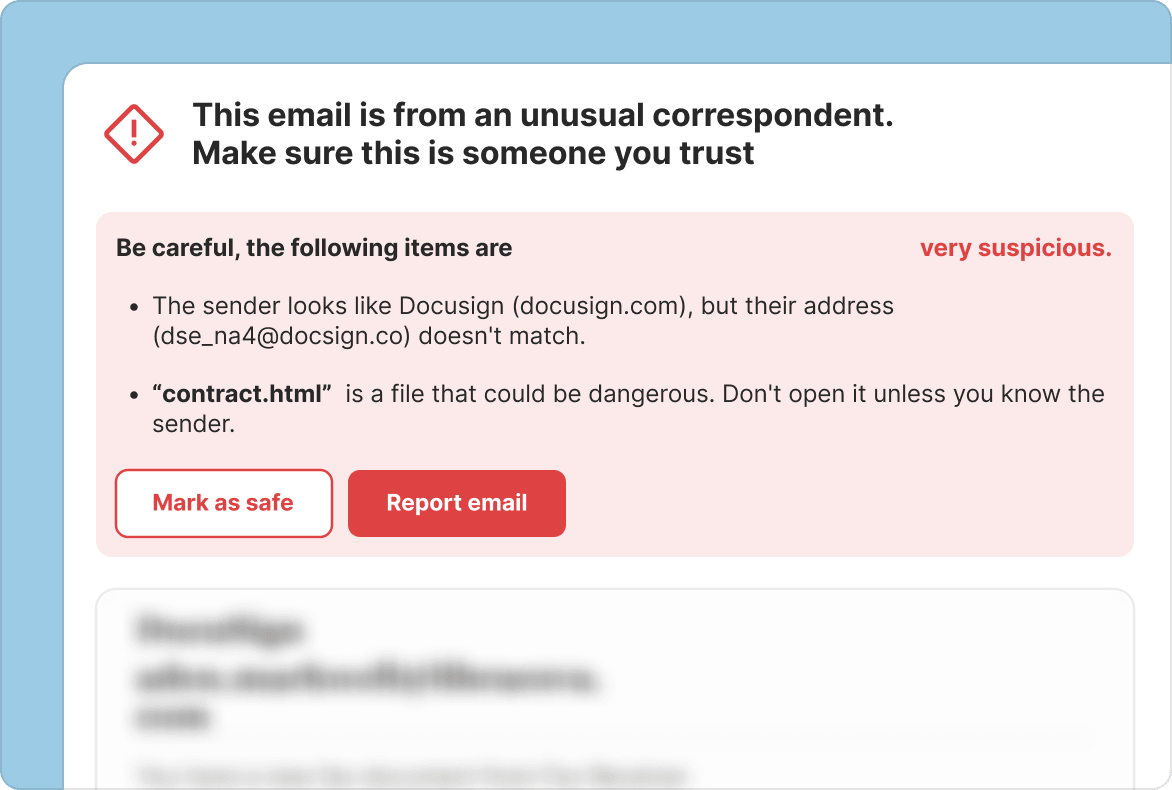
Contextual email banners
Extend Email Security with LibraCyber Smart Banners, adding contextual guidance directly in the inbox when employees encounter potentially risky messages.
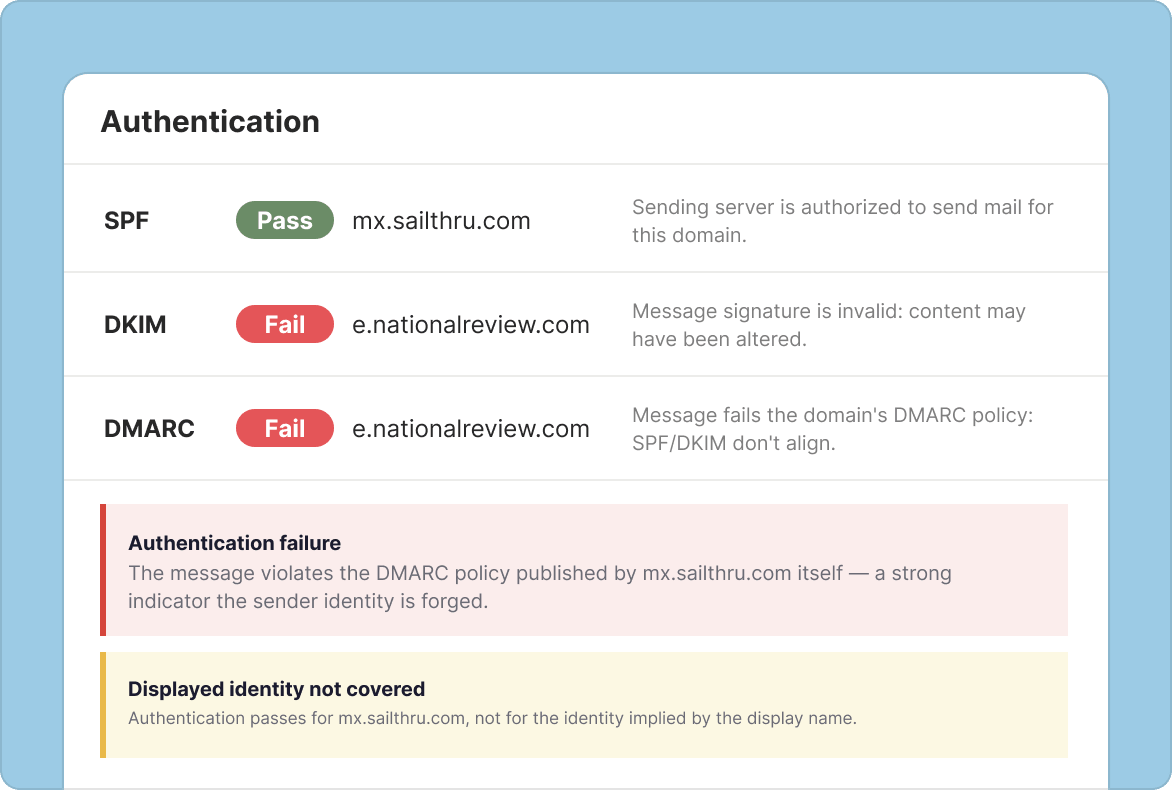
Verify senders, protect your domain
Every inbound message is checked against SPF, DKIM, and DMARC, catching spoofed senders before they reach the inbox. To protect your own domain from being spoofed, use LibraCyber’s LetsDMARC.
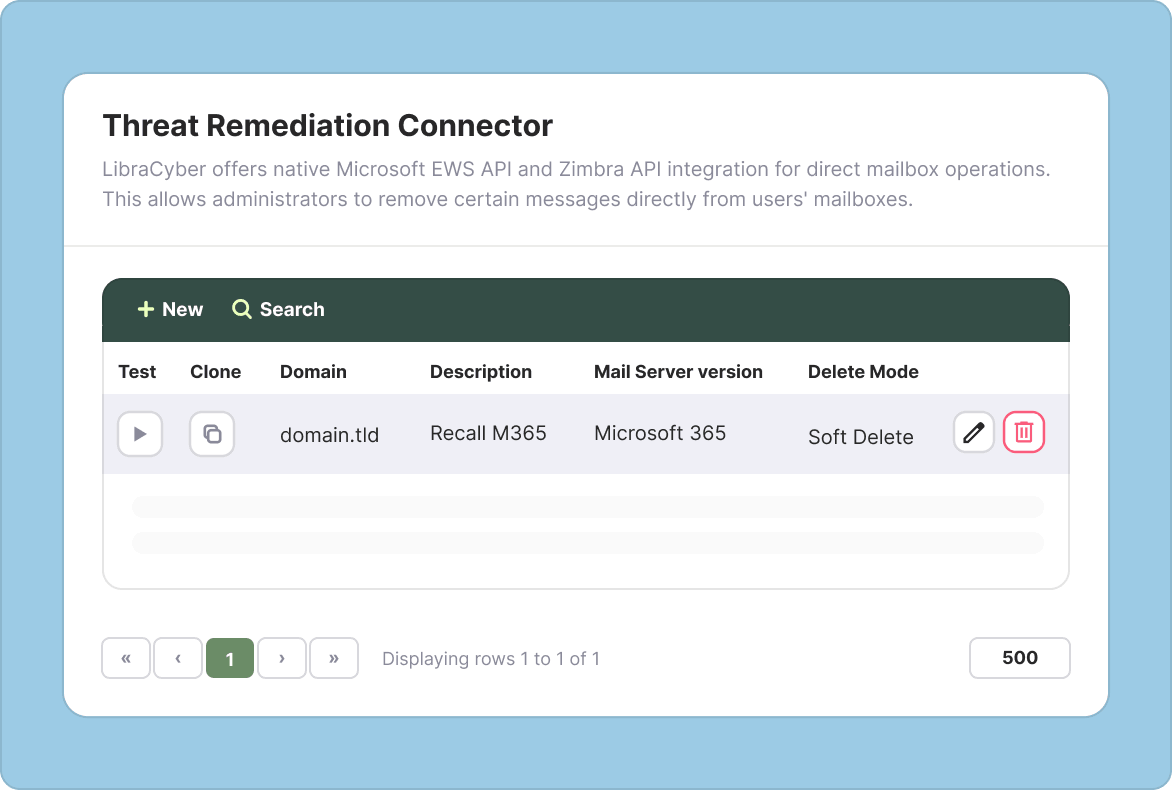
Deploy fast, manage effortlessly
Live in under 30 minutes on cloud, on-premises, or hybrid — then run everything from one console, or hand it to an authorized LibraCyber MSSP entirely.
Protect your organisation without your data ever leaving it
Talk to our team about deployment options, regulatory alignment, and what sovereign privacy-first architecture means in practice.
What is LibraCyber Email Security, and how does it protect email?
Email Security is a privacy-first, layered email protection product that combines secure gateway scanning, cloud email API integration, and AI that runs inside your own environment. It blocks threats before delivery, supports detection and remediation after messages land, and analyzes message meaning and communication behavior without sending email content to public AI services.
What happens to emails if the mail server or Microsoft 365 / Google Email goes down?
LibraCyber’s Email Security includes Email Continuity capability, so users can still read, reply to, forward, and send email from the LibraCyber portal while the mailbox is unavailable. Links are still checked when clicked, and outgoing messages pass the same checks as normal mail. A copy of each sent message goes back to the sender’s mailbox once service returns.
How does Email Security keep email data private when using AI?
Email Security keeps AI-based analysis inside the customer environment rather than sending email content to public LLMs or third-party AI providers, and its AI engines don’t use customer email content to train public models. This architecture preserves control of sensitive email data while still providing AI-assisted threat detection.
How does Email Security use AI to detect sophisticated email threats?
Email Security uses Semantic AI to analyze the meaning and logic of a message, while Adaptive Trust maps normal communication patterns and flags unusual interactions or behavior. Together, they help detect attacks that look legitimate on the surface and might otherwise slip past traditional filtering that only checks known senders or links.
Does Email Security use a gateway, cloud APIs, or both?
Both. A secure gateway scans and blocks threats before delivery, while cloud email APIs for Microsoft 365 and Google Workspace provide visibility and remediation after messages land. Combining both approaches gives security teams protection before and after delivery, rather than forcing a choice between one architecture or the other.
What is Second Sight AI, and when would an employee use it?
Second Sight AI is Email Security’s on-demand second-opinion capability for a message an employee is unsure about. It analyzes message content, metadata, and sender reputation to present a clearer assessment, helping employees make an informed decision without relying only on instinct or escalating every questionable message to the security team.
How do Smart Banners complement LibraCyber Email Security?
Smart Banners is a LibraCyber product that works with Email Security or on its own. Either way, it gives employees contextual guidance inside the email at the moment of risk, right before they click, reply or open an attachment. Paired with Email Security, it complements threat detection and remediation.
How can LibraCyber’s Email Security be deployed and managed?
Email Security can be deployed in cloud, on-premises, or hybrid environments and managed through a central console. It can also be operated by an authorized LibraCyber MSSP, giving organizations flexibility in how they deploy, administer, and support their email security environment without necessarily building that expertise in-house.
How does Email Security protect against malicious attachments and links?
Email Security analyzes suspicious attachments in an isolated sandbox before they reach the mailbox and re-checks links again at the moment they’re clicked. This catches threats that use malicious files or URLs that change behavior after the original message already passed inspection, rather than relying on a single scan at delivery time.